
Blog
Cómo crear un montaje de boda impresionante | La guía experta de Kristin Batalucco
Hace
kristin batalucco
Discover Kristin Batalucco’s expert, experience-based guide to designing a stunning wedding setup. Practical, proven tips to support couples, planners, suppliers.
Introducción
Planning a wedding—be it for yourself, your clients, or as a supplier—can feel like navigating a maze. You want to honor personal style, meet logistical demands, support vendors, and impress guests—all without breaking the bank or burning out. I’m Kristin Batalucco, and over years of setting up wedding days and partnering with planners and suppliers, I’ve walked the path you’re on. In this guide, I’ll share lessons from real-life setups (with honest before-and-after reflections), reveal the scientific principles behind effective décor and planning, and lay out structured, actionable solutions that make your job not just doable—but joyfully manageable.
Contenido
- Experience: Before-and-After Real Wedding Setup
- The Science of Wedding Design
- Structured Planning: Step-by-Step Pathway
- Tailored Advice for Different Audiences
- Couples (DIY or hiring planners)
- Wedding & party companies
- Distributors & procurement professionals
- Conclusión
- PREGUNTAS FRECUENTES
- Póngase en contacto con
1. Experience: Before-and-After Real Wedding Setup
1.1 Before
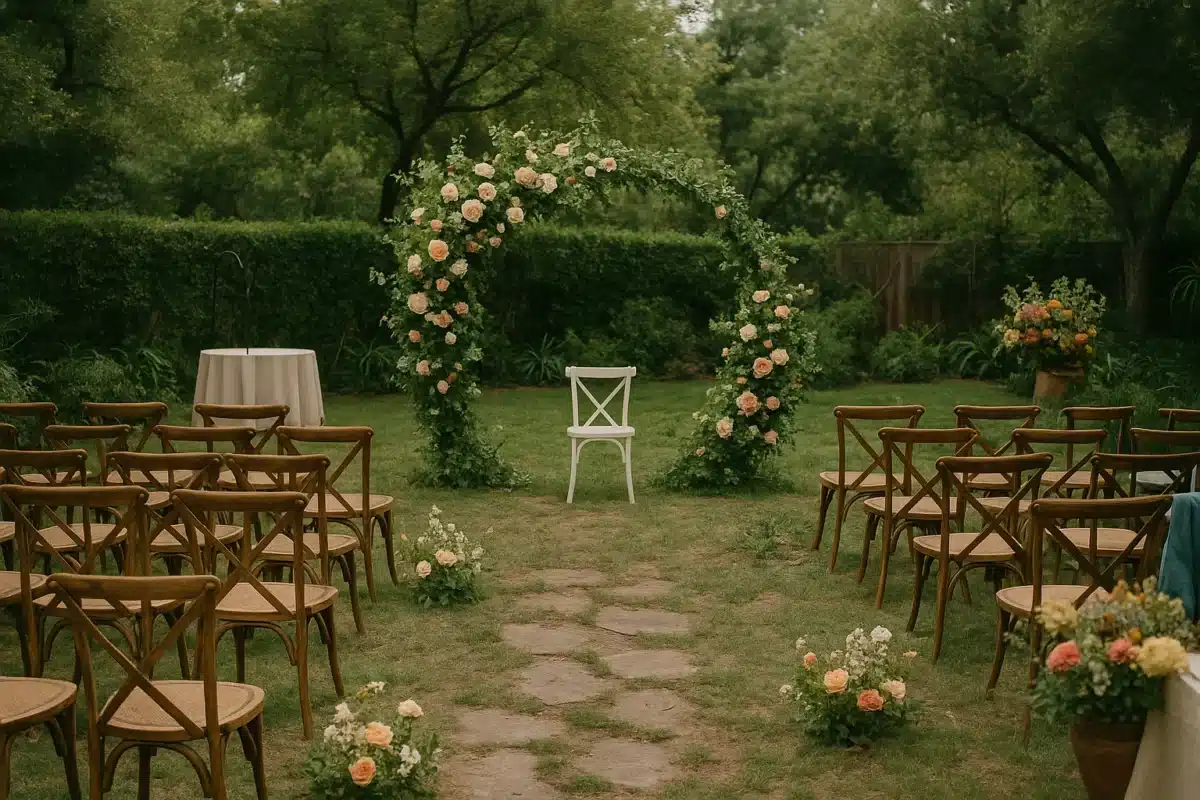
I once helped a couple struggling with a plain garden venue—it felt flat, lacked focal points, and their floral budget had already jumped beyond estimates. Without a clear concept, décor elements were randomly chosen, resulting in a disjointed look and a frazzled planning experience.
1.2 After
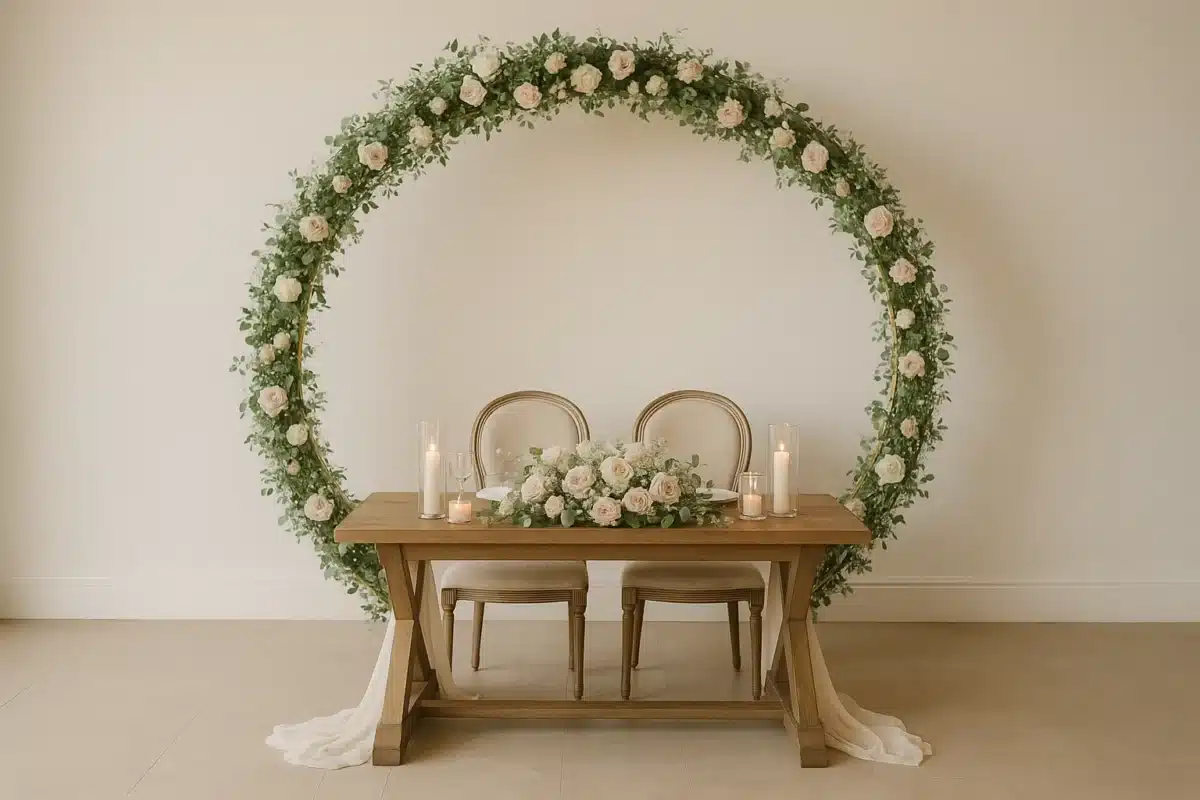
We pivoted to a cohesive, thematic design: we chose a “rustic elegance” palette—soft ivory flowers, warm fairy lights, weathered wood signs—and created a visually compelling ceremony backdrop and sweetheart table. The transformation was dramatic: what had felt empty became intimate and expressive. On the day, I captured a side-by-side shot—before against the naked garden wall, and after with floral framing and mood lighting—that still serves as my go-to proof that intentional design transforms both space and experience.
2. The Science of Wedding Design
2.1 Psychological Impact of Color & Lighting
Soft, warm lighting triggers feelings of comfort and romance. Ivory and blush tones evoke purity and softness. By applying principles of color psychology and warm light (around 2700–3000K bulbs), we subtly guide guests into a relaxed, emotionally open state.
2.2 Focal Point Theory
Humans naturally gravitate to visual centers. A defined ceremony arch, sweet-heart table backdrop, or feature wall draws attention and anchors the composition of the space—creating both aesthetic order and memory-making impact.
2.3 Human Flow & Spatial Planning
Scientific studies in ergonomics show that guests feel more comfortable in venues where circulation zones are clear. Designing intuitive traffic flows—from ceremony to cocktail hour to dinner—and avoiding bottlenecks increases enjoyment and reduces stress.
3. Structured Planning: Step-by-Step Pathway
Step 1: Define Core Theme & Emotional Goal
Ask: What feeling should the design evoke—intimacy, festivity, classic elegance? This becomes the filtering lens for all decisions.
Step 2: Audit Your Venue
Take photos of empty spaces. Sketch rough spatial zones. Identify natural lines, lighting, sight-lines, and constraints (e.g., power outlets, ceiling height).
Step 3: Create Visual Hierarchy
Decide on 2–3 focal points (e.g., ceremony backdrop, head table, entrance). Sketch them.
Step 4: Allocate Budget Strategically
Prioritize spend on high-impact, low-cost elements—like lighting and focal décor. Scale back on extras that don’t advance emotional or visual goals.
Step 5: Prototype & Mock Setup
Where feasible, set up a small mock-scene or layout in an off-time to test proportions, material behavior, and flow.
Step 6: Build Vendor & Team Briefing
Provide vendors (florists, lighting crew, planners) with a concise mood board, lighting spec (e.g., bulb color temperature), and map of spatial zones to ensure alignment.
Step 7: Rehearse and Document
Do a tech/rehearsal run, photograph placement of key elements, take notes on adjustments needed. Use these observations to refine future setups.
4. Tailored Advice for Different Audiences
4.1 Couples Preparing for Their Wedding
- For DIY planners: Start early, build a mood board, and choose specs (e.g., pick lighting bulb tone before selecting other décor). Try a small mock setup—an arched backdrop with sample florals and a test light—to see scale and feeling.
- For those hiring planners: Ask your planner for color-temperature guidance and mock-setup photos. Insist on vendor briefs—this gives you confidence that your vision will translate.
4.2 Wedding & Party Companies
- Desarrolle “tableros de ambiente iniciales” estándar para los estilos de moda (por ejemplo, “elegancia rústica”, “minimalismo moderno”, “botánico tropical”) que puedan personalizarse para cada cliente, con plantillas de iluminación, módulos de puntos focales y proporciones recomendadas (por ejemplo, altura de los centros de mesa frente a anchura de las mesas).
- Formar al personal en teoría del punto focal y principios del flujo humano para que cada configuración sea a la vez bella y funcionalmente intuitiva.
4.3 Distribuidores y profesionales de la contratación
- Adquiera aparatos de iluminación que permitan ajustar la temperatura del color: esta flexibilidad sirve a las distintas visiones de los clientes y mejora el valor de reventa.
- Agrupa los kits de decoración en torno a temas con materiales recomendados y guías de distribución; a los proveedores les encantan las soluciones llave en mano, “montar y ejecutar”.
5. Conclusión
El diseño de bodas no tiene por qué ser una conjetura o una apuesta emocional. Basándose en montajes reales, conocimientos científicos de diseño y rutas de planificación estructuradas, puede crear espacios que resuenen profundamente y funcionen sin problemas. Tanto si eres una pareja que invierte su corazón y su tiempo, como si eres un organizador o una empresa de fiestas que ofrece magia a sus clientes, o un proveedor que crea comodidad para los compradores, tú tienes el poder de transformar los espacios en experiencias inolvidables. Deja que la claridad, la ciencia y la empatía guíen tus decisiones.
PREGUNTAS FRECUENTES
P1: ¿Cómo elegir la temperatura de color adecuada para la iluminación?
El blanco cálido (2700-3000K) crea un ambiente romántico y acogedor, ideal para la ceremonia y la cena. Prueba las opciones con antelación utilizando bombillas LED baratas antes de alquilar o comprar luminarias.
P2: ¿Cuál es la forma más fácil de crear un punto focal?
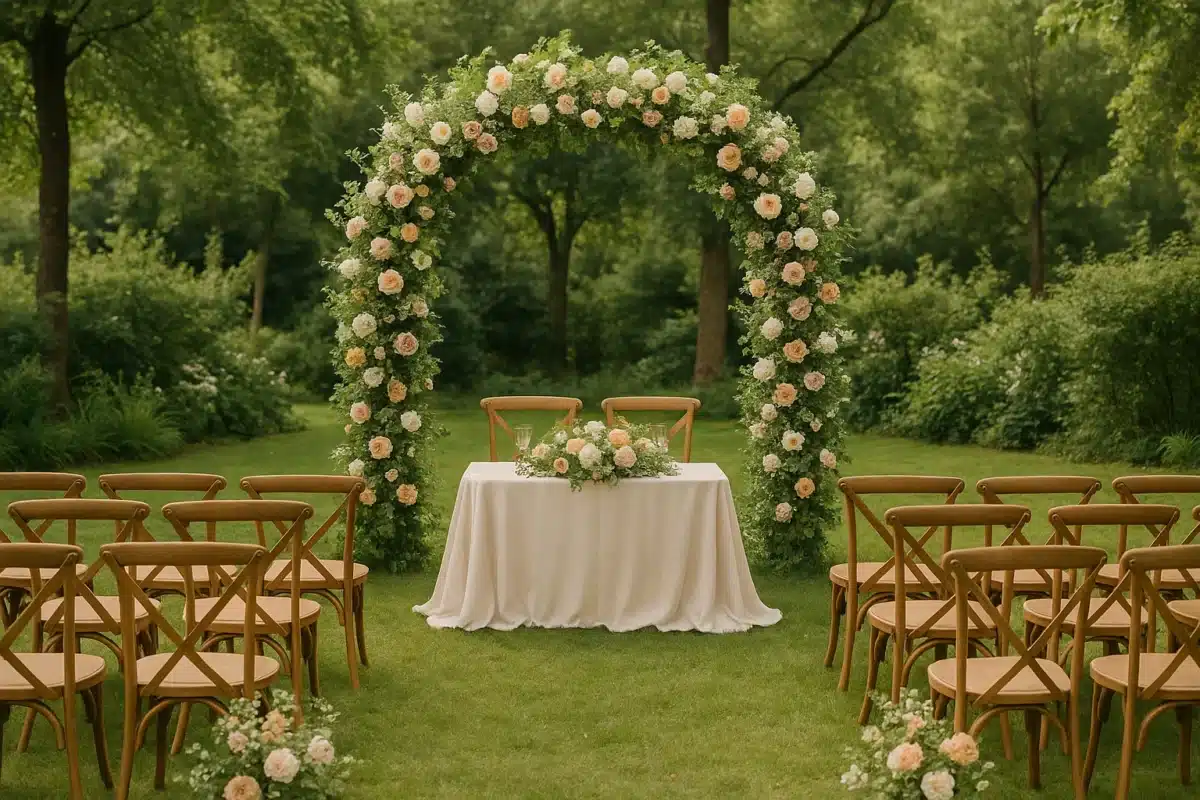
Empieza con un sencillo arco o telón de fondo. Vístelo con cortinas suaves, flores o letreros. Asegúrate de que contraste con el fondo del lugar y resáltalo con una iluminación sutil para atraer la mirada.
P3: ¿Cómo puedo planificar el flujo de invitados en los locales al aire libre?
Trace caminos desde la ceremonia hasta el salón y el comedor. Utilice bordes naturales o grupos de elementos decorativos para guiar suavemente el movimiento. Evite los cuellos de botella (puertas, escaleras, etc.) entre las zonas clave.
P4: Soy distribuidor, ¿cómo puedo crear kits de decoración que gusten a los planificadores?
Agrupe los elementos por temas; incluya una guía visual de diseño, una hoja de especificaciones de iluminación y muestras de muestras. Modular los kits para que sean fáciles de adaptar y enviar.
P5: ¿Qué ventajas tiene el simulacro de rodaje antes del evento?
Permite ver la escala, comprobar la iluminación, solucionar problemas logísticos y ofrecer a los equipos una referencia visual, lo que ahorra tiempo, preocupaciones y errores el día de la presentación.
Póngase en contacto con
Si desea asesoramiento personalizado o explorar soluciones de decoración y colaboraciones, no dude en ponerse en contacto con nosotros:
- WhatsApp: +86 152 6621 4311
- Correo electrónico: info@eventflowerwall.com
- Página web: https://eventflowerwall.com/
