Discover the beauty of Jewish wedding dance traditions, from the Hora to heartfelt customs. Explore expert insights, real experiences, and planning tips for couples and event professionals.
Introduction
The Jewish wedding dance is far more than festive movement—it is a spirited expression of community, love, and ancestral tradition. From the iconic Hora to personalized dance rituals that bring generations together, these vibrant moments are the heartbeat of a Jewish wedding celebration.
Whether you’re a bride, groom, event planner, or a supplier supporting a multicultural wedding, understanding the deeper meaning and practical choreography of these dances is essential. This article unveils the full experience of Jewish wedding dances: their origin, emotional power, contemporary adaptations, and how to stage them effectively for maximum joy and participation.
Chapter 1: The Roots and Meaning of Jewish Wedding Dances
1.1 Historical and Cultural Significance
Jewish wedding dances date back centuries, rooted in Eastern European, Sephardic, and Middle Eastern traditions. These dances symbolize the communal support offered to the new couple and celebrate the joy of their union.
In traditional Jewish communities, dancing is not merely entertainment—it’s a spiritual act. Guests dance “lifnei hakallah v’hatan”—in front of the bride and groom—as a way of honoring them.
1.2 The Spiritual Element
Many dances at Jewish weddings are inspired by Biblical joy and Talmudic guidelines, which encourage celebration, singing, and dancing at weddings. The energetic movements, group formations, and celebratory circle dances all communicate a single message: this marriage matters to the community.

Chapter 2: The Most Iconic Dance — The Hora
2.1 What Is the Hora?
The Hora is the most famous Jewish wedding dance. It features guests dancing in a circle while lifting the bride and groom on chairs. This dance is typically accompanied by the traditional song “Hava Nagila.”
2.2 Symbolism Behind the Chair Lift
The lifting of the couple in chairs isn’t just for thrill. It signifies elevating the couple in joy, both literally and metaphorically. The guests below represent the foundation of support on which the couple stands—family, friends, tradition, and community.
2.3 How It’s Performed
- The music starts fast and gets faster
- Guests form concentric circles around the couple
- Chairs are lifted high—caution and coordination are key
- It often transitions into freestyle circle dancing
Pro Tip for Planners: Ensure sturdy chairs and have strong, sober participants lead the lifting for safety.

Chapter 3: Other Traditional Jewish Wedding Dances
3.1 Krenzl
This dance honors the mother of the bride, who is crowned with flowers while her daughters dance around her. A beautiful moment to celebrate family matriarchs.

3.2 Mizinke
A traditional dance performed when the last child in a family gets married. Parents are adorned with garlands while friends and relatives dance around them in celebration.

3.3 Badeken Dance
Before the bedeken ceremony—where the groom veils the bride—there may be short, symbolic dances between the groom, family members, or musicians to express emotional blessing.

Chapter 4: Modern Twists on Jewish Wedding Dances
4.1 Mixed Traditions
Today’s Jewish weddings often blend cultural influences—combining Israeli folk dances with modern hip-hop, or Hora transitions into line dancing or choreographed TikTok-style group routines.
4.2 Flash Mobs and Surprises
In recent years, surprise dance performances by bridal parties or even grandparents have become popular. These often include Jewish themes or costumes and reflect the couple’s humor and creativity.
4.3 Live Band vs. DJ: Which Enhances the Dance Better?
While DJs can remix classics for upbeat transitions, live bands remain the gold standard for Jewish dances—creating a contagious energy that encourages even shy guests to get up and join.
Chapter 5: The Science Behind Why These Dances Work
5.1 Movement and Emotion
Scientific studies show that group dancing elevates oxytocin, the hormone linked to bonding and happiness. This explains why Jewish wedding dances create unforgettable emotional highs.
5.2 Music and Memory
Repetitive melodies like “Hava Nagila” activate areas of the brain tied to long-term memory, meaning guests often remember the Hora even years later as the most joyful part of the wedding.
Chapter 6: Planning Tips from Experience
Having designed numerous wedding decor installations, including for Jewish clients, we’ve encountered common challenges—and learned how to resolve them:
6.1 Real-Life Challenge: Guest Participation
Problem: Guests unfamiliar with the dance feel excluded.
Solution: Brief the emcee or bandleader to give quick verbal cues before each dance. Having “circle leaders” from both families also helps.
6.2 Real-Life Challenge: Floor Safety and Setup
Problem: Cramped venues or uneven floors can disrupt movement.
Solution: Pre-check dance areas, use non-slip flooring, and clear tables early to maximize space.
6.3 Real-Life Challenge: Coordinating Décor and Dancing
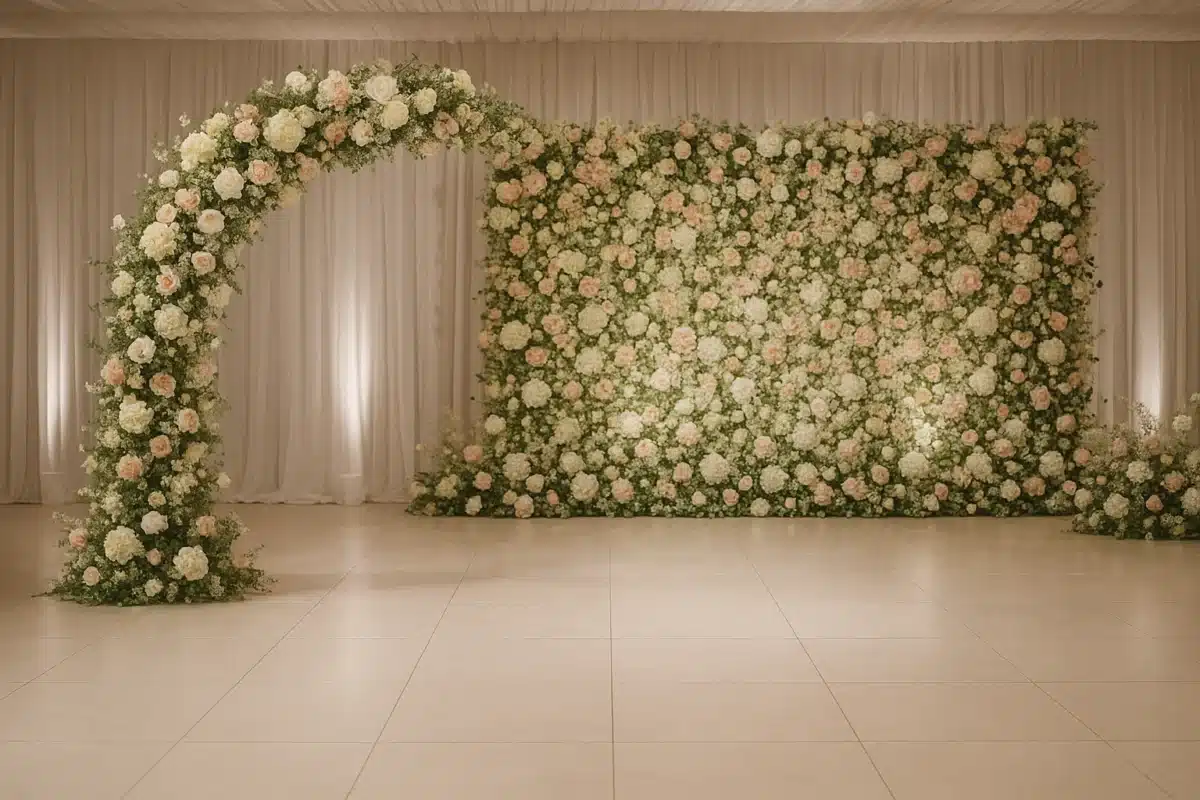
Flower walls, arches, and backdrops should not obstruct movement. We’ve learned to strategically place flower installations for photos while keeping dance areas clear.
This is a crucial balance that inexperienced decorators may miss—but the right setup maximizes both aesthetic and experience.
Chapter 7: For Professionals—How to Incorporate Jewish Wedding Dance in Your Services
7.1 For Wedding Planners
- Coordinate dance schedule with the officiant and caterer
- Arrange a short dance rehearsal if many guests are unfamiliar with the customs
- Provide optional wedding programs explaining the dance traditions
7.2 For Decor and Rental Suppliers
- Ensure all décor is durable, movable, and secure
- Offer photo-worthy backdrops like floral arches or dance-floor signage with Hebrew phrases
7.3 For Distributors and Procurement Teams
- Stock modular dance floors and foldable chairs with arm support
- Offer packages that include sound systems tuned for live Jewish bands or traditional wedding music
Conclusion: Jewish Wedding Dance—Where Joy Meets Tradition
In every twirl, lift, and circle step, Jewish wedding dances unite the past, present, and future of a couple’s life together. They’re more than entertainment—they are emotional, communal, and deeply meaningful.
Whether you’re tying the knot or curating the perfect event for your client, integrating these dances will transform the celebration into something unforgettable.
And with the right planning, space design, and cultural sensitivity, these moments can be executed safely and beautifully—every single time.
Frequently Asked Questions (FAQ)
Q1: What is the purpose of the Jewish wedding dance?
A: It celebrates the marriage while expressing communal support and joy. It’s a symbolic and emotional way to honor the couple and their families.
Q2: Can non-Jewish guests participate?
A: Absolutely! Jewish wedding dances are meant to be inclusive. Guests are encouraged to join the circle, even if unfamiliar with the steps.
Q3: How long does the Hora usually last?
A: Between 10 to 20 minutes, depending on the couple’s preference, energy of the crowd, and live band pacing.
Q4: Are these dances suitable for outdoor weddings?
A: Yes. Just ensure the ground is flat, dry, and safe for dancing. Temporary dance floors can be installed on grass or sand for better footing.
Q5: How can I ensure everyone feels involved in the dances?
A: Announce upcoming dances clearly, invite all generations to participate, and keep the music upbeat and familiar.
Contact Us to Elevate Your Event with Cultural Elegance
Whether you’re planning your own wedding or organizing for a client, our expert team is here to help you create unforgettable moments—from flower wall backdrops to custom event installations that align with every cultural detail.
📧 [email protected]
📞 WhatsApp: +8615266214311
🌐 https://eventflowerwall.com
Let’s bring your vision to life—with color, culture, and joy.