
Blog
Event Photographers – Guide to On-Site Flower Wall Installations
Nov
In the world of event photography, creating visually stunning backdrops is essential for capturing memorable moments. Flower walls, with their vibrant hues and artistic designs, have emerged as a popular choice among event planners and photographers. This article aims to provide distributors, wholesalers, and procurement professionals in the event industry with a comprehensive guide to onsite flower wall installations. It covers topics such as understanding flower walls, planning for installations, setting up techniques, photography tips, and postevent considerations.
Understanding Flower Walls
- What are Flower Walls?
Definition and Purpose
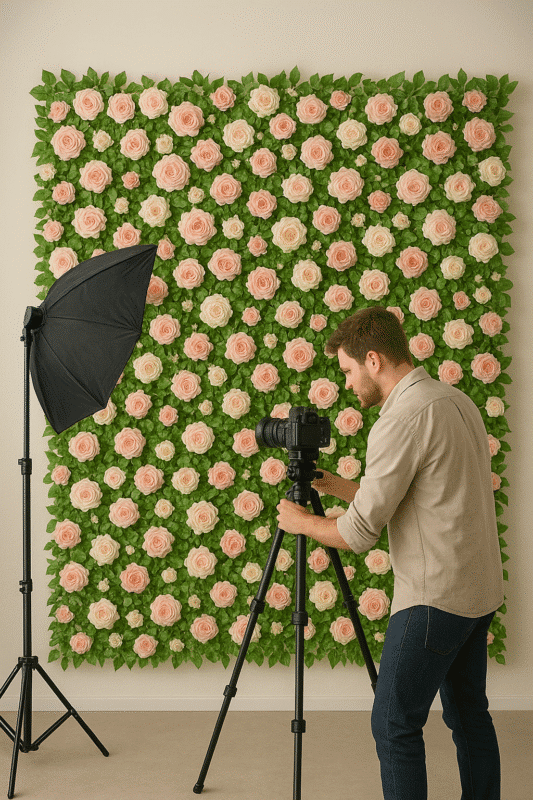
Flower walls are decorative backdrops made up of real or artificial flowers arranged in an aesthetically pleasing manner. They can be customized to fit the theme and color palette of any event and are commonly used for weddings, corporate events, parties, and promotional activities.
Advantages
- Create a visually striking focal point that enhances the overall atmosphere of an event.
- Provide a beautiful setting for photographs, making them a popular choice among event planners and photographers.
- Flower walls can also double as a branding or promotional tool, as they can be designed to incorporate logos, slogans, or specific color schemes.
- Types of Flower Walls
Real vs. Artificial
When it comes to choosing the right flower wall for an event, one of the primary decisions to be made is whether to use real or artificial flowers.
Real Flower Walls: These installations are made up of fresh flowers and foliage, providing a natural and fragrant backdrop for events. They offer a stunning visual appeal but require careful planning, maintenance, and timely installation to ensure freshness throughout the event.
Artificial Flower Walls: Made from synthetic materials, artificial flower walls are durable, lowmaintenance, and can be reused for multiple events. They come in various designs and can closely mimic the appearance of real flowers, making them a practical choice for photographers.
Planning for OnSite Flower Wall Installations
- Coordination with Event Planners
Communication is Key
Effective communication between photographers and event planners is crucial for successful flower wall installations. Before the event, it¡¯s important to discuss the event¡¯s theme, color palette, and desired aesthetics with the event planner to ensure that the flower wall complements the overall design and enhances photographic opportunities.
Logistics and Timing
Coordinate the timing of the installation with the event planner. Determine when the flower wall will be set up and how it aligns with the event schedule, allowing ample time for adjustments and lighting considerations.
- Selecting the Right Location
Visibility and Accessibility
Choose a location that is easily visible to guests and photographers. The flower wall should be positioned where it can be seen in various photo opportunities, such as during speeches, toasts, or posed portraits. Accessibility is also important, as the installation team will need easy access to set up and take down the wall.
Lighting Conditions
Assess the lighting conditions of the chosen location. Natural light is ideal for photography, so consider placing the flower wall near windows or outdoor areas where it can benefit from soft, diffused light. Additionally, ensure that the wall won¡¯t be affected by harsh direct sunlight, which can create unflattering shadows and cause colors to fade.
- Designing the Flower Wall
Customization Options
Customization can play a significant role in enhancing the visual appeal of a flower wall, making it a unique feature of the event.
Color Schemes: Select flower colors that match the event¡¯s theme and color palette. Coordinating the flower wall with the overall decor can create a cohesive look that elevates the atmosphere.
Incorporating Branding: For corporate events or promotional activities, consider incorporating branding elements into the flower wall design. This could include logos, slogans, or specific color schemes that reflect the company¡¯s identity.
Setting Up the Flower Wall
- Installation Techniques
Stability and Safety
Proper installation is key to ensuring that the flower wall remains stable and safe throughout the event.
Secure Framework: Use a sturdy framework to support the flower wall, ensuring it can withstand movement and potential disturbances. The framework can be made from wood, metal, or other durable materials, depending on the size and design of the wall.
Anchoring the Wall: Depending on the size and weight of the flower wall, it may need to be anchored to prevent tipping or falling. Use weights or secure it to a solid structure to ensure stability.
- Maintenance During the Event
Keep the Flower Wall Fresh
Regular maintenance is essential to keep the flower wall looking its best throughout the event, especially when using real flowers.
Assign a team member to monitor the flower wall during the event, ensuring that any wilted or damaged flowers are promptly replaced or adjusted.
For real flowers, ensure they are properly hydrated before the event, using water tubes or floral foam to keep them fresh and vibrant.
Photography Tips for Flower Walls
- Utilizing Natural Light
Natural lighting can dramatically enhance the beauty of flower walls in photographs.
Golden Hour Shooting: Schedule photography sessions during the golden hour, shortly after sunrise or before sunset, when the light is soft and warm. This time of day can create stunning images with rich colors and gentle shadows.
Positioning for Light: Position subjects in relation to the flower wall to take advantage of natural light. Avoid harsh overhead lighting that can create unflattering shadows on faces.
- Composition Techniques
Framing the Shot
Effective composition is key to creating highquality photographs taken against flower walls.
Rule of Thirds: Use the rule of thirds to create balanced and visually appealing compositions. Position the flower wall offcenter to draw the viewer¡¯s eye and create a dynamic image.
Incorporating Depth: Experiment with depth by including foreground elements, such as decorative props or additional floral arrangements, to create a layered effect in the photograph.
- Capturing Details
Focus on Features
In addition to full shots, capturing closeup details of the flower wall can add variety to the photography portfolio.
Highlighting Textures: Focus on the textures and patterns of the flowers, showcasing their intricate details. Closeup shots can reveal the beauty of individual blooms and add depth to the overall collection of images.
Creative Angles: Experiment with different angles and perspectives to capture the flower wall in unique ways. Lowangle shots or overhead views can create striking compositions that stand out.
PostEvent Considerations
- Reviewing the Photography
Image Selection and Feedback
After the event, it¡¯s important for photographers to review their work and assess the effectiveness of the flower wall installations.
Carefully select images that best showcase the flower wall and its impact on the overall photography. Look for shots that highlight the beauty of the flowers and the emotions of the event.
Gather feedback from clients regarding the flower wall¡¯s impact on the event and the photographs. This feedback can provide valuable insights for future projects.
- Maintaining Relationships with Suppliers
Networking and Staying Informed
Establishing strong relationships with flower wall suppliers can benefit photographers in the long run.
Networking Opportunities: Attend industry events and networking opportunities to connect with flower wall suppliers and event planners. Building these relationships can lead to future collaborations and referrals.
Stay Informed: Keep uptodate with trends in flower wall designs and installations. Understanding what¡¯s popular can help photographers offer valuable insights to clients and enhance their service offerings.
Conclusion
Onsite flower wall installations are a powerful tool for enhancing event photography, providing stunning backdrops that elevate the overall aesthetic of any occasion. By understanding the planning, setup, and photography techniques associated with flower walls, photographers can create breathtaking images that capture the essence of the event. For distributors, wholesalers, and procurement professionals in the event industry, recognizing the importance of flower walls and their potential to create value for clients can lead to valuable opportunities for collaboration and growth. Embracing the beauty of flower walls not only enhances the visual storytelling of events but also helps create lasting memories for clients and attendees alike.
FAQ
- What are flower walls used for in events?
Flower walls are used as decorative backdrops for various events, including weddings, corporate functions, parties, and promotional events. They enhance the visual appeal and provide stunning settings for photographs.
- How do I choose between real and artificial flower walls?
When choosing between real and artificial flower walls, consider factors such as budget, maintenance requirements, and the desired aesthetic. Real flower walls offer natural beauty, while artificial ones provide durability and low maintenance.
- What should I discuss with event planners before an installation?
Before an installation, discuss the event¡¯s theme, color palette, desired aesthetics, logistics, and timing with event planners. Clear communication ensures that the flower wall complements the overall design and enhances photographic opportunities.
- How can I ensure the flower wall remains fresh during the event?
To keep the flower wall fresh during the event, assign a team member to monitor it regularly, replace wilted flowers, and ensure real flowers are properly hydrated using water tubes or floral foam.
- What are some tips for photographing flower walls?
Utilize natural light, experiment with composition techniques like the rule of thirds, capture closeup details, and try different angles to enhance the quality of photographs taken against flower walls.
- How can I build relationships with flower wall suppliers?
Attend industry events, network with suppliers and event planners, and maintain open communication to build strong relationships with flower wall suppliers. These connections can lead to future collaborations and referrals.
- What are the best times of day for flower wall photography?
The best times for flower wall photography are during the golden hour, shortly after sunrise or before sunset, when the light is soft and warm. This lighting creates stunning images with rich colors and gentle shadows.
- How can I analyze the effectiveness of flower wall installations after an event?
After the event, review the photography to assess the impact of the flower wall installations. Select images that showcase the beauty of the flowers and gather feedback from clients regarding their satisfaction with the flower wall¡¯s contribution to the event.
