
Blog
Lighting Tips to Enhance Your Flower Wall Display
Nov
Lighting Tips for Flower Wall for Distributors, Wholesalers and Procurement
Flower walls have become increasingly popular in recent years as a way to add beauty and dimension to any space. Whether it¡¯s for a wedding, corporate event, retail display or home decor, flower walls have become a soughtafter element. However, while the choice of flowers and arrangement is crucial in creating a stunning floral backdrop, lighting can make or break the overall look. Proper lighting can bring out the vibrancy of the colors, create a mood or ambiance, and draw attention to specific areas of the display. Therefore, for distributors, wholesalers, and procurement professionals in the floral industry, it¡¯s essential to understand how to use lighting to enhance flower walls. This article will provide tips, techniques, and ideas on how to light up your flower walls to create a captivating and memorable display.
The Importance of Lighting in Floral Displays
- Enhancing Visual Appeal
Lighting can make a significant impact on how colors and textures are perceived in floral arrangements. Properly lit flower walls can bring out the vibrancy of the colors and the intricacies of the petals, making the display more visually appealing. On the other hand, poor lighting can make the colors appear dull and the details harder to appreciate.
a. Color Perception
Different types of lighting can affect how colors are perceived. For example, warm lighting can enhance reds and yellows, while cool lighting can accentuate blues and greens. Understanding how light interacts with color is vital in choosing the right lighting to enhance the flowers in the display.
- Creating Mood and Atmosphere
Lighting sets the tone for any event or space. Soft and warm lighting can create a romantic and intimate atmosphere, while bright and cool lighting can create a more energizing and exciting ambiance. By using lighting strategically, you can influence the mood of the space and enhance the overall experience for the guests or customers.
a. Emotional Impact
Lighting can also elicit different emotional responses in people. For example, a welllit floral display at a wedding can create a magical and enchanting atmosphere that enhances the romantic mood of the event. On the other hand, a corporate event may benefit from brighter lighting that conveys professionalism and clarity.
- Drawing Attention
Effective lighting can also be used to guide the viewer¡¯s eye to specific elements of a floral display. By highlighting certain areas or features, you can create focal points that draw attention and enhance the overall composition. This is particularly useful in event settings where you want to emphasize specific elements of the decor.
Types of Lighting for Floral Displays
- Ambient Lighting
a. Definition and Purpose
Ambient lighting provides general illumination for a space, creating a comfortable level of brightness without causing glare. It serves as the foundation for all other lighting types and helps set the overall mood of the space.
b. Implementation
- Ceiling Fixtures: Use overhead fixtures such as chandeliers or pendant lights to provide ambient lighting for larger spaces.
- Wall Sconces: Wallmounted fixtures can add warmth and character to the space while providing soft illumination.
- Accent Lighting
a. Definition and Purpose
Accent lighting is used to highlight specific areas or features within a display. It creates visual interest by drawing attention to particular elements, such as a flower wall, artwork, or architectural details.
b. Implementation
- Spotlights: Use adjustable spotlights to focus on specific sections of the flower wall. This technique allows you to control the intensity and direction of the light, creating dramatic effects.
- Track Lighting: Install track lighting above the flower wall to provide flexibility in illuminating different areas. This system allows you to adjust the positioning of the lights as needed.
- Task Lighting
a. Definition and Purpose
Task lighting provides focused illumination for specific activities or tasks. While it is not typically used for floral displays, it can be beneficial in settings where detailed work is performed, such as floral arrangement workshops or design studios.
b. Implementation
- Desk Lamps: Use adjustable desk lamps for closeup work on flower arrangements, ensuring adequate lighting for detailed tasks.
- Portable Lights: Consider portable task lights for outdoor events where additional lighting may be needed for setup or arrangement.
- Decorative Lighting
a. Definition and Purpose
Decorative lighting adds visual appeal and enhances the overall aesthetic of a space. It can include various fixtures that serve as design elements while providing illumination.
b. Implementation
- Fairy Lights: String lights or fairy lights can add a whimsical touch to flower walls, creating a magical atmosphere. Drape them around the floral arrangement or within the display to enhance its charm.
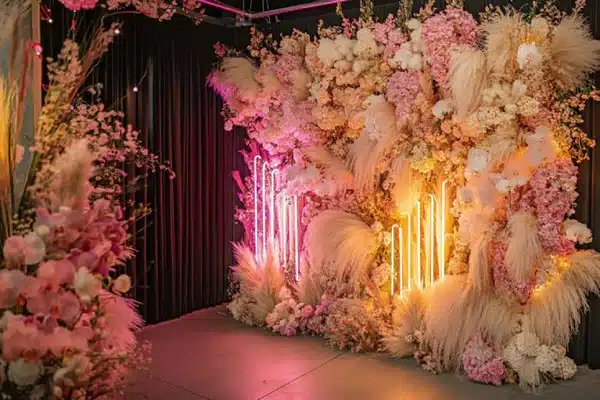
- LED Strips: Incorporate LED strip lights along the edges of the flower wall for a modern and sleek look. These lights can be dimmed or adjusted to achieve the desired effect.
Techniques for Effective Lighting
- Layering Light
a. Combining Different Lighting Types
To create a welllit flower wall display, it¡¯s essential to layer different types of lighting. Combining ambient, accent, and decorative lighting can create a dynamic and visually appealing arrangement that enhances the overall aesthetic.
b. Creating Depth and Dimension
Layering light adds depth and dimension to the floral display. By using ambient lighting for overall illumination and accent lighting to highlight specific areas, you can create a multidimensional effect that captivates viewers.
- Adjusting Brightness
a. Dimming and Brightening
Adjusting the brightness of your lighting can dramatically change the atmosphere of a space. Dimming lights can create a softer, more intimate setting, while increasing brightness can energize the environment.
b. Using Dimmers
Incorporate dimmer switches to allow for flexibility in adjusting light levels. This feature enables you to tailor the lighting to suit different events or moods throughout the day.
- Positioning Lights Strategically
a. Angling Lights for Effect
The positioning of lights is crucial for achieving the desired effect. Experiment with different angles and distances to find the most flattering illumination for your flower wall.
b. Avoiding Harsh Shadows
Ensure that lights are positioned to minimize harsh shadows. This can be achieved by using multiple light sources and adjusting their angles to create a more even distribution of light across the floral display.
- Considering Color Temperature
a. Understanding Color Temperature
Color temperature refers to the hue of the light emitted by a bulb, measured in Kelvin (K). Warmer light (lower Kelvin values) creates a cozy and inviting atmosphere, while cooler light (higher Kelvin values) produces a more clinical and energetic feel.
b. Choosing the Right Color Temperature
For floral displays, a warm color temperature (around 2700K to 3000K) is often preferred as it enhances the natural beauty of the flowers and creates a welcoming ambiance. However, consider the overall theme and purpose of the event when selecting the appropriate color temperature.
Practical Tips for Implementation
- Test Lighting Before the Event
Before setting up your flower wall display, conduct a lighting test to see how different lighting types and placements affect the arrangement. This practice allows you to make adjustments and ensure the best possible outcome.
- Use Quality Lighting Fixtures
Investing in highquality lighting fixtures is essential for achieving the desired effect. Quality lights not only enhance the beauty of the floral display but also provide better color rendering and longevity.
- Consider the Venue¡¯s Natural Light
Take into account the venue¡¯s natural light sources when planning your lighting setup. If the space has ample natural light, you may need to adjust your artificial lighting to complement or counterbalance it.
- Plan for Different Times of Day
If your event spans multiple hours, consider how the lighting will change throughout the day. Plan for adjustments as natural light fades, ensuring that your floral display remains welllit and visually appealing.
- Incorporate Lighting into Overall Design
When designing your flower wall display, think about how lighting can enhance the overall design. Integrate lighting elements into the arrangement itself, creating a cohesive and harmonious look that elevates the entire display.
Conclusion
Lighting is an essential element in enhancing flower walls, and its impact on the overall look and feel of the floral display cannot be overstated. By understanding the different types of lighting, employing effective techniques, and considering practical implementation tips, distributors, wholesalers, and procurement professionals can create stunning floral arrangements that captivate and engage viewers. As the demand for beautiful and immersive floral displays continues to grow, mastering the art of lighting will remain an essential skill in the industry.
FAQ
How does lighting impact the appearance of flower walls?
Lighting affects how colors and textures are perceived in floral arrangements. Proper lighting can enhance the vibrancy of colors and bring out the intricacies of the flowers, while poor lighting can dull their appearance.
What types of lighting are best for flower wall displays?
The best types of lighting for flower wall displays include ambient lighting for general illumination, accent lighting to highlight specific areas, and decorative lighting for added visual appeal. Combining these types creates a wellrounded and engaging display.
How can I create depth and dimension with lighting?
To create depth and dimension, layer different types of lighting, adjust brightness levels, and position lights strategically to highlight specific features of the floral display. This approach adds visual interest and enhances the overall composition.
What color temperature should I use for flower wall lighting?
A warm color temperature (around 2700K to 3000K) is often preferred for flower wall displays, as it enhances the natural beauty of the flowers and creates a cozy atmosphere. However, consider the overall theme and purpose of the event when selecting the appropriate color temperature.
How can I minimize harsh shadows in my floral display?
To minimize harsh shadows, use multiple light sources and adjust their angles to create an even distribution of light across the floral arrangement. Experiment with different positions to find the most flattering illumination.
Should I test lighting before the event?
Yes, conducting a lighting test before the event is essential to see how different lighting types and placements affect the arrangement. This practice allows you to make adjustments and ensure the best possible outcome.
How can I incorporate lighting into the overall design of my flower wall?
Integrate lighting elements into the arrangement itself to create a cohesive look. Consider using string lights, LED strips, or other decorative lighting options that complement the floral display and enhance its overall aesthetic.
What are some common mistakes to avoid when lighting floral displays?
Common mistakes include using inadequate lighting, failing to adjust brightness levels, neglecting the natural light in the venue, and not testing the lighting setup before the event. Being mindful of these factors can help create a more balanced and visually appealing floral wall.
