
Blog
The Art of Combining Blooms and Greenery in Backdrops
Nov
The Art of Combining Blooms and Greenery in Backdrops
Backdrops play a significant role in creating memorable experiences for events, and combining blooms and greenery can elevate them to the next level. For distributors, wholesalers, and procurement professionals in the floral industry, mastering the art of combining flowers and foliage is crucial to meet client expectations and deliver stunning floral arrangements. In this article, we will explore the techniques and tips for combining blooms and greenery, discuss the importance of both elements in floral design, and provide practical insights to help you create breathtaking backdrops that will leave a lasting impression.
Understanding the Importance of Blooms and Greenery
- The Role of Blooms
Blooms, or flowers, are the primary components in floral arrangements that add color, texture, and personality to backdrops.
- Variety of colors: Flowers come in a wide range of colors, allowing designers to create vibrant and eyecatching backdrops or soft and romantic settings.
- Symbolism and meaning: Different flowers have unique meanings and symbolism that can enhance the emotional impact of an event, such as love, purity, or gratitude.
- The Role of Greenery
Greenery, also known as foliage, serves as the foundation of floral arrangements, providing structure, balance, and a natural element that complements the blooms.
- Textural contrast: Foliage adds depth and contrast to floral designs, enhancing the overall visual appeal by complementing the flowers¡¯ textures.
- Color harmony: Greenery helps unify a color palette by providing a neutral backdrop that allows the blooms to stand out, or by introducing subtle shades of green that complement the primary colors of the flowers.
Principles of Combining Blooms and Greenery
- Balance and Proportion
Achieving balance and proportion is essential for a harmonious and cohesive design when combining blooms and greenery.
- Visual weight: Consider the visual weight of both flowers and foliage, balancing larger, more vibrant blooms with ample greenery to prevent the design from feeling topheavy.
- Proportion: Use a proportional approach when selecting the amount of greenery versus blooms, such as a 60% greenery and 40% blooms ratio for a balanced look.
- Color Coordination
Color coordination is vital for a cohesive and aesthetically pleasing palette when combining blooms and greenery.
- Complementary colors: Utilize complementary colors to create vibrant contrasts, such as pairing orange blooms with dark green foliage.
- Analogous colors: Choose flowers and foliage next to each other on the color wheel for a harmonious look, such as shades of pink with soft greens for a serene atmosphere.
- Texture Variety
Incorporating a range of textures is key to creating dynamic and visually interesting floral backdrops.
- Mixing textures: Combine different types of flowers and greenery to create a rich textural experience, such as soft velvety roses with spiky thistles or delicate ferns.
- Layering techniques: Use layering to create depth in your design, placing larger blooms in the background and smaller flowers and greenery in the foreground for a threedimensional quality.
Techniques for Combining Blooms and Greenery
- The Cascade Technique
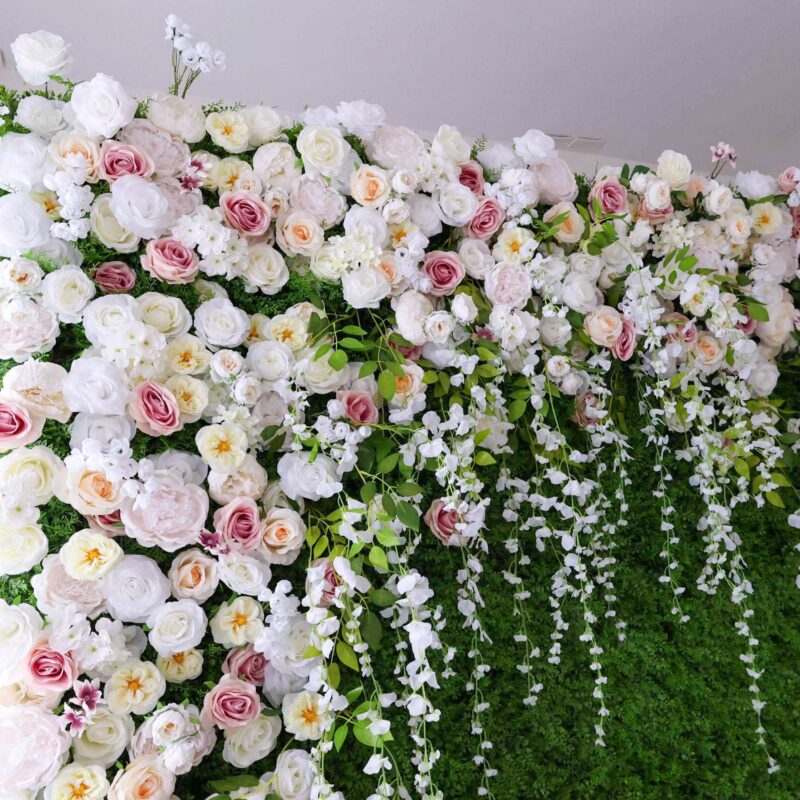
The cascade technique involves arranging flowers and greenery to create a flowing, organic look.
- Design approach: Start with a base of greenery, allowing it to drape downwards. Layer larger blooms towards the top, and incorporate smaller flowers and foliage as you move downward.
- Visual impact: This technique creates a sense of movement and is effective for romantic or fluid atmospheres, such as wedding backdrops or events.
- The Cluster Method
The cluster method groups flowers and greenery in clusters to create focal points within the backdrop.
- Design approach: Select a few types of blooms and cluster them together with complementary greenery to create eyecatching focal points.
- Visual impact: This method is effective for dynamic designs that encourage exploration and engagement with the backdrop.
- The Frame Technique
The frame technique uses greenery to create a defined structure around the blooms.
- Design approach: Use larger foliage to frame the flowers, creating a structured look that highlights the blooms and adds formality to the design.
- Visual impact: This method can enhance the elegance of the backdrop, making it suitable for upscale events or corporate functions.
- The Wreath Style
The wreath style combines blooms and greenery in a circular arrangement for a harmonious and balanced design.
- Design approach: Use a base of greenery to form a circular shape, then fill in with blooms, ensuring even distribution throughout the design.
- Visual impact: This approach creates a cohesive and inviting look, perfect for welcoming guests at events such as weddings or parties.
Practical Tips for Successful Combination
- Plan Your Design
Before starting your floral backdrop, take the time to plan your design.
- Sketch your ideas: Create rough sketches of your design to visualize how the blooms and greenery will work together, helping you identify potential issues before execution.
- Select your materials: Choose blooms and greenery that align with your design vision, considering factors such as color, texture, and seasonal availability.
- Focus on Quality
The quality of your blooms and greenery can significantly impact the final result.
- Freshness matters: Always choose fresh flowers and foliage, as they will not only look better but also last longer, ensuring your backdrop remains stunning throughout the event.
- Sustainable sourcing: Consider sourcing materials from local growers or suppliers who prioritize sustainable practices to support local businesses and reduce the environmental impact of your floral design.
- Experiment with Different Combinations
Don¡¯t be afraid to experiment with various blooms and greenery combinations.
- Trial and error: Use scrap materials to test different arrangements and combinations, as this handson approach can lead to unexpected and beautiful results.
- Get feedback: Share your designs with colleagues or clients for feedback, as their insights can help you refine your approach and create even more appealing backdrops.
- Consider the Venue
The venue plays a significant role in how your floral backdrop will be perceived.
- Size and scale: Consider the size of the backdrop in relation to the venue, adjusting the boldness of your blooms and the amount of greenery accordingly.
- Lighting conditions: Take into account the venue¡¯s lighting conditions, as natural light can enhance the colors of your blooms, while artificial lighting may require adjustments to your color choices.
Conclusion
The art of combining blooms and greenery in backdrops is a valuable skill that can elevate any event design. By understanding the principles of balance, color coordination, and texture variety, distributors, wholesalers, and procurement professionals can create stunning floral arrangements that captivate audiences and enhance the overall experience. With thoughtful planning, quality materials, and a willingness to experiment, the possibilities for creating beautiful floral backdrops are limitless. Embracing this art form not only meets client expectations but also establishes a reputation for excellence in floral design.
FAQ
What is the ideal ratio of blooms to greenery in a floral backdrop?
A common guideline is to use approximately 60% greenery and 40% blooms for a balanced look.
How can I select the right color palette for my floral backdrop?
Start by defining the mood and theme of the event, then use complementary or analogous colors to create a cohesive look and ensure blooms and greenery work well together.
What are some effective techniques for arranging blooms and greenery?
Some effective techniques include the cascade technique for flow, the cluster method for focal points, the frame technique for structure, and the wreath style for circular harmony.
How do I ensure the freshness of my flowers and greenery?
Source your materials from reputable suppliers and consider purchasing them as close to the event date as possible. Proper storage and care before the event can also help maintain freshness.
Can I use artificial flowers in my backdrop design?
Yes, artificial flowers can be effectively used in backdrop designs. They offer longlasting beauty and can be combined with fresh greenery for added texture and depth.
How important is texture in floral design?
Texture is crucial as it adds depth and interest. Mixing different textures in blooms and greenery creates a visually engaging backdrop that captivates viewers.
How can I adapt my floral backdrop to different venues?
Consider the size and scale of the venue when designing your backdrop. Adjust the boldness of your blooms and the amount of greenery to ensure the design complements the space effectively.
What should I do if I¡¯m unsure about my design choices?
Experiment with different arrangements and combinations using scrap materials. Seek feedback from colleagues or clients to refine your design and ensure it meets expectations.
